Dukoral Canada

Cholera is a vaccine-preventable disease, consider DUKORAL®1

Cholera is an important public health problem worldwide and is endemic in 69 countries18,19

According to the World Health Organization, researchers have estimated 1.3 to 4 million cholera cases occur annually, and 21,000 to 143,000 deaths worldwide.19

Cholera trends worldwide20,21

The world is currently experiencing a global resurgence of cholera, with an estimated 1 billion people at risk worldwide.20
Since the beginning of 2024 alone, outbreaks have been reported in 33 countries, with more than 511,000 cases and 4100 deaths worldwide.20

The five countries reporting most new cases are:21

  • Afghanistan (123,416)
  • Yemen (74,452)
  • Sudan (62,315)
  • South Sudan (53,602)
  • Democratic Republic of The Congo (46,832)

The five countries reporting most new deaths are:21

  • Sudan (1,749)
  • Democratic Republic of The Congo (1,507)
  • South Sudan (862)
  • Nigeria (468)
  • Angola (344)
Cholera is an acute intestinal infection caused by the bacterium Vibrio cholera, which can lead to profuse and watery diarrhea, and if not treated properly, severe dehydration and death. DUKORAL® is not indicated to reduce dehydration or prevent death.1,19
Infection is acquired primarily by ingesting contaminated water or food; person-to-person transmission is rare.22

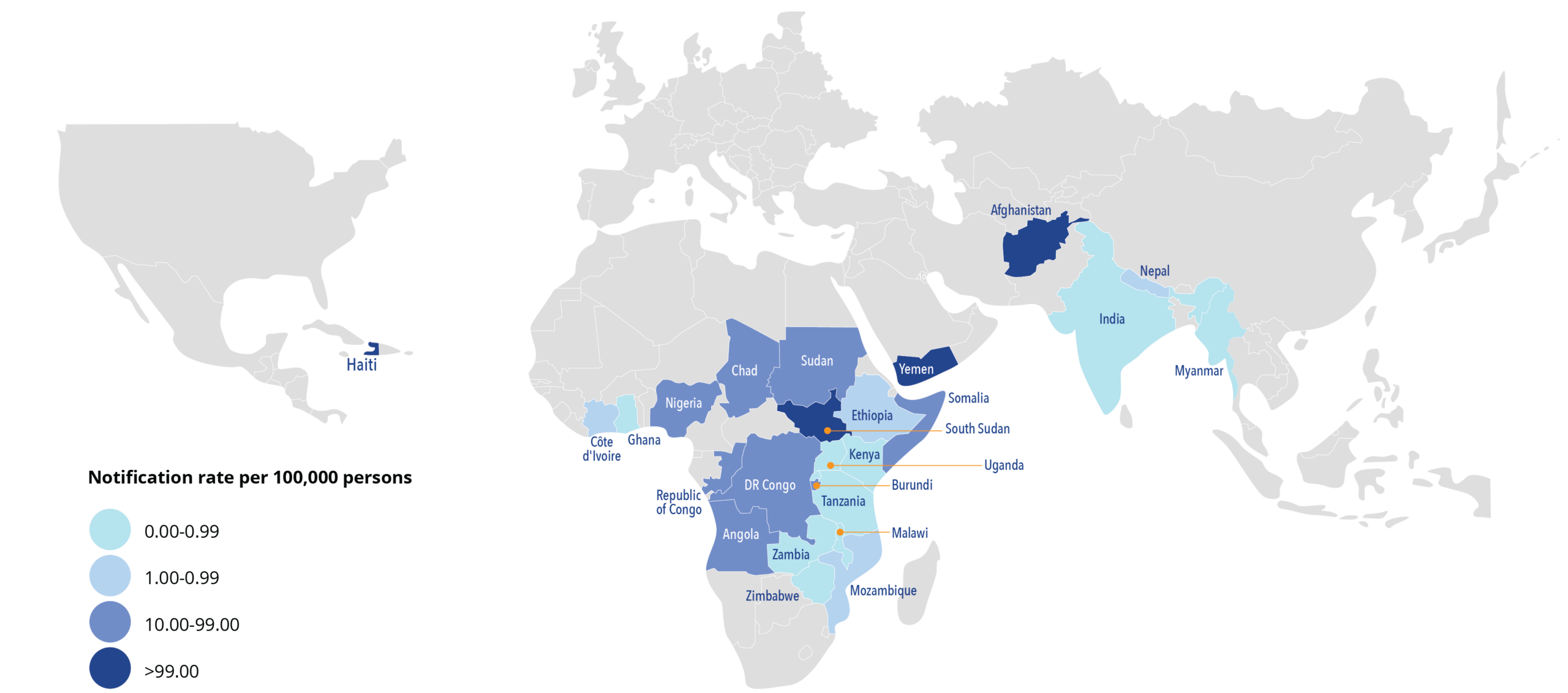
Worldwide distribution of cholera cases (August to October 2025): 21

Adapted from the European Centre for Disease Prevention and Control (2025).21

Risk factors

Populations with increased susceptibility to cholera and LT-producing ETEC diarrhea and who are at higher risk for more severe disease include:1
  • Persons with achlorhydia
  • Persons with previous gastrectomy
  • Persons with history of repeated severe diarrhea
  • Young children >2 years
  • Immunosuppressed individuals due to HIV infection with depressed CD4 count or other immunodeficiency states

Advise your patients to take precautions while ingesting food and water and to maintain thorough personal hygiene while travelling

When it comes to cholera, the following precautions should be taken while travelling:
  • Foods should be well-cooked and served warm16
  • Raw vegetables, uncooked meat or seafood, and other foods maintained at room temperature should be avoided16
  • Tap water and ice (including frozen drinks not made from filtered water) are also high-risk16
  • Carbonated beverages, beer and wine, hot coffee and tea, fruits that can be peeled, and canned products generally are safe16
  • The risk for developing cholera increases when eating at restaurants and when purchasing food from street vendors16
  • Frequent hand washing with soap and clean water will decrease the likelihood of the bacteria spreading, especially to others that you may be travelling with16
DUKORAL® should be used in accordance with official recommendations taking into account the epidemiological variability and the risk of contracting diarrheal illness in different geographical areas and in different conditions of travel.1
DUKORAL® should not replace standard preventive hygiene measures. Rehydration measures must be taken in case of diarrhea.1
Contact with contaminated food and beverages may be frequent and unforeseen.
Discuss preventative measures for cholera with your patients, including DUKORAL®, at least 2 weeks prior to their trip abroad.

I am a Canadian healthcare professional


This will close in 0 seconds

Je suis un professionnel de la santé canadien


This will close in 0 seconds


Valneva Canada Inc.
Commercial Operations
3535 Saint-Charles Blvd., Suite 600
Kirkland (Québec) H9H 5B9, Canada

This will close in 0 seconds


Valneva Canada Inc.
Affaires commerciales
3535, boul. Saint-Charles, bureau 600
Kirkland (Québec) H9H 5B9, Canada

This will close in 0 seconds

I am a Canadian traveller


Yes

This will close in 0 seconds

Je suis un voyager Canadien


Yes

This will close in 0 seconds